
 19.09.2026
I used to think a morning routine needed to be a perfectly organised list of habits performed before sunrise. In midlife, I have found something much more useful: a routine that supports my energy without becoming another job. A perimenopause morning routine can be a simple collection of choices that help me feel more steady, while remembering that personal experience is not medical advice and persistent concerns deserve a conversation with a qualified clinician.
The ideas below are the small things I return to because they fit into an ordinary morning. They are not a promise to fix every symptom, but they can create a little more structure during a stage when bodies and schedules often feel less predictable. Lifestyle approaches such as healthy eating, exercise, sleep habits, and stress management are commonly recommended as part of menopause wellbeing guidance.
Hydration and Morning Mineral Support

My first morning habit is surprisingly unglamorous: water before I start negotiating with my inbox. I keep it simple because a routine I cannot maintain is just another item on my to-do list. Hydration is a low-effort morning habit that supports general wellbeing, even though it is not a treatment for perimenopause symptoms.
My practical tip
I skip complicated powders and stacks. A glass of water beside the kettle works better for me than buying another product that needs remembering. A simpler setup usually wins in my kitchen.
Gentle Stretching for Hormonal Balance

I do not call my morning stretching a miracle routine. It is simply a way to wake up my stiff shoulders and remind myself that movement can be gentle. Activities such as yoga and regular exercise are included in lifestyle suggestions for managing menopause-related wellbeing.
The worth-the-energy question I ask is simple: does this make my morning easier? If yes, I keep it. If it becomes a performance, I drop the pressure.
Protein-Rich Breakfast for Steady Energy

Breakfast became less about following a perfect plan and more about avoiding the midmorning crash that made me wonder why I was suddenly exhausted. A balanced eating pattern with sources such as protein, fruit, vegetables, whole grains, and calcium-rich foods is often recommended during menopause.
| Morning choice | Why I like it |
|---|---|
| Eggs or yogurt | Easy protein option |
| Fruit and whole grains | Adds variety and fibre |
I am not chasing a perfect breakfast. I am looking for a steady energy foundation that works on a normal weekday.
Mindful Breathing and Stress Reduction

I used to think breathing exercises sounded like something I would do after becoming a more organised person. Naturally, that person never arrived. A few quiet minutes can still be useful as a small stress reset, especially on mornings that begin too quickly.
Mindfulness, relaxation practices, and looking after emotional wellbeing are included among lifestyle approaches that may help some women during the menopause transition. I treat them as tools, not guarantees.
Morning Sunlight and Circadian Rhythm Support

Opening the curtains became one of those tiny habits I underestimated. A little morning light while I walk June or drink coffee outside helps mark the beginning of my day. Morning light is often discussed as part of supporting a regular body clock and sleep routine.
A realistic reminder
I do not expect sunlight to solve every sleep problem. If sleep disruption is persistent or affecting daily life, it is worth discussing with a healthcare professional. A morning rhythm is support, not a cure.
Strength Training for Bone and Muscle Health

The older I get, the more I appreciate strength for practical reasons. Carrying groceries, lifting boxes, and getting up from the floor all count as real life. Guidance for menopause wellbeing highlights the importance of maintaining muscle strength and supporting bone health through physical activity.
What I like
- Supports everyday strength
- Can be adapted to my schedule
What I avoid
- Turning exercise into punishment
- Buying equipment before creating a habit
Skincare and Self-Care Rituals

My skincare shelf became much calmer when I stopped treating every new product as a possible answer to every change I noticed. These days, I prefer a routine that feels pleasant and realistic. A manageable skincare routine is more useful than a bathroom full of unfinished bottles.
I see skincare as self-care and comfort, not a battle against ageing. My goal is skin that feels looked after, not a younger version of myself.
Planning a Calm and Balanced Day
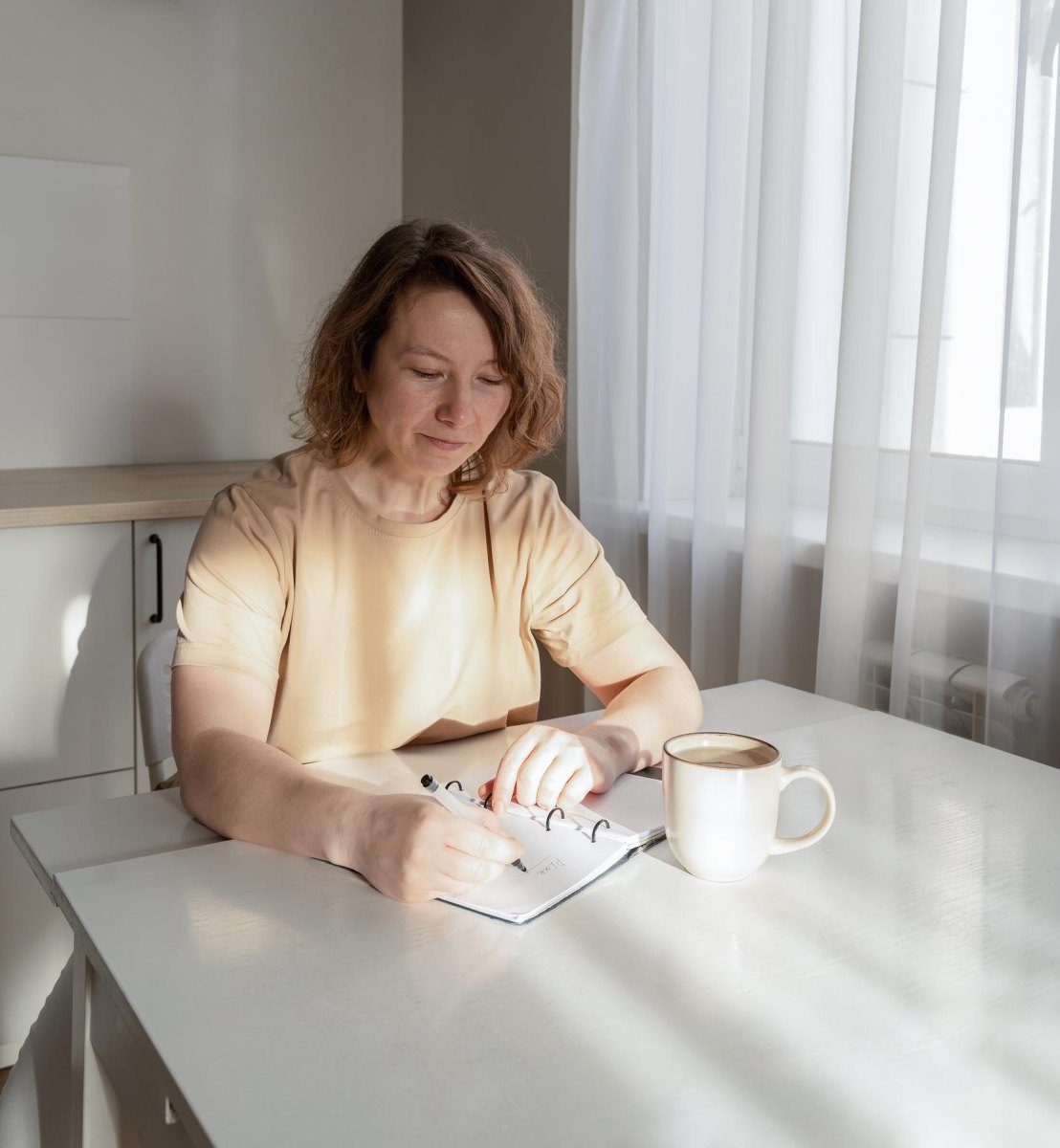
The final part of my morning routine is deciding what actually matters today. Perimenopause can arrive alongside work changes, family shifts, and a calendar that somehow remains full. A little planning helps me protect my limited daily energy.
My morning reset
- Choose the important task.
- Leave room for unexpected moments.
- Notice what makes the day easier.
I no longer believe a successful morning has to look impressive. The best routine is the one that supports my real life after the novelty wears off.

More Pinterest Visuals












 Sleep & Insomnia Solutions13 Natural Ways to Get More Deep Sleep and Wake Up Feeling Rested
 Health & Wellness6 Simple Healthy Habits After 40 That Make Everyday Life Better
 Energy, Hormones & Stress ManagementMenopause und Nachtschweiß – 16 praktische Lösungen für ruhigere Nächte
 Energy, Hormones & Stress Management18 Natural Energy Boosters Without Caffeine That Fit Real Life