
 27.09.2026
I have learned that the routines I actually keep are rarely the dramatic ones. A cortisol calming routine does not need a shelf full of products, a complicated tracker, or a 5 a.m. schedule that makes me want to crawl back under the duvet.
For me, the useful question is always whether a habit makes ordinary life easier. These small practices are not a way to “fix” my body or guarantee a certain hormone level, but they can support calmer mornings, steadier evenings, and better awareness of what helps me feel more settled.
Morning Sunlight Exposure for Cortisol Balance

Morning light is one of the simplest pieces of my routine because it asks very little from me. Cortisol naturally follows a daily rhythm, with a rise around waking that helps prepare the body for the day. Research on the cortisol awakening response shows how closely this pattern is connected with circadian timing and environmental cues.
I do not treat sunlight like a magic switch. I simply open the curtains, step outside with June when the weather cooperates, or drink my coffee near a bright window. The low-effort version is five minutes outdoors while doing something I already planned to do.
My simple morning light routine
- Open blinds soon after waking
- Take a short outdoor walk when possible
- Pair sunlight with an existing habit like coffee
Deep Breathing Exercises to Calm the Nervous System

I used to think breathing exercises sounded like another item on my already crowded to-do list. Then I realised the appeal was exactly that they require almost nothing. Slow breathing practices have been studied for their relationship with stress responses, and some research has found changes in measures such as perceived stress and cortisol-related outcomes.
My favourite approach is not a perfect technique. It is simply sitting still for a few minutes and making my breathing slower. Some studies have explored patterns such as prolonged exhalation, but there is no need to turn breathing into a performance.
- Settle. Sit comfortably and relax your shoulders.
- Breathe. Slow your breathing without forcing a specific number.
- Repeat. Continue for a few minutes when you need a reset.
Gentle Movement and Stress-Reducing Exercise
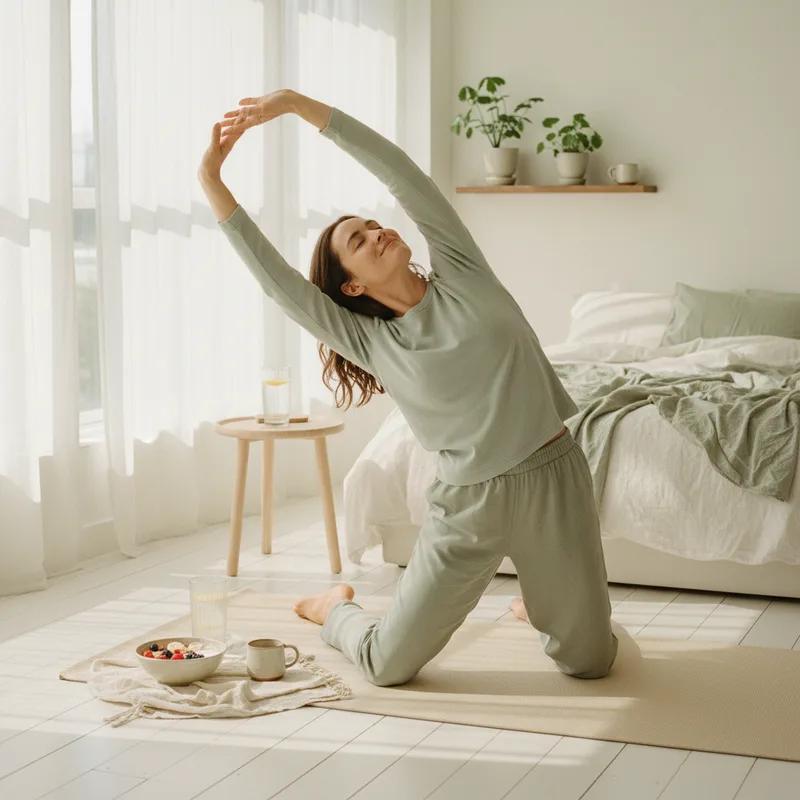
My relationship with exercise changed when I stopped treating it as something I had to “make up for” with intensity. A walk, stretching session, or gentle strength routine can be enough to reconnect with my body on a busy day.
Movement is not a replacement for medical care or a guarantee that stress hormones will behave perfectly. For me, the benefit is often practical: better mood and energy, fewer hours sitting at my desk, and a clearer transition between work and home.
What I like about gentle movement
- Easy to fit into normal days
- Does not require expensive equipment
- Can be adjusted for different energy levels
What it does not solve
- Persistent unexplained fatigue
- Every source of stress in life
- The need for professional advice when concerns continue
Balanced Meals to Support Stable Energy Levels

I am suspicious of any eating plan that requires me to carry a spreadsheet into the kitchen. In midlife, I have found that regular meals with a mix of foods are usually more realistic than chasing the newest rule.
Meals that include protein, fibre-rich foods, and satisfying fats can help create steadier energy for many people. Nutrition needs vary, so I focus on simple meal structure rather than strict promises about cortisol or metabolism.
- Breakfast: Choose something filling enough to carry you through your morning.
- Lunch: Build around a balance of protein, plants, and carbohydrates you enjoy.
- Dinner: Keep it practical enough that you will actually make it.
Evening Wind-Down Routine for Better Sleep

My evenings improved when I stopped trying to create a luxurious bedtime ritual and started removing friction. A calm bedroom, a predictable stopping point for work, and softer lighting often do more for me than another complicated sleep product.
Light exposure is one factor that interacts with our body clocks, and research has explored how the timing of light relates to sleep patterns. I think of this as making sleep easier, not forcing it.
- Dim bright lights before bed when possible
- Put tomorrow’s small tasks on paper instead of carrying them mentally
- Create a repeatable cue that tells your brain the day is ending
Mindfulness Practices for Daily Stress Relief
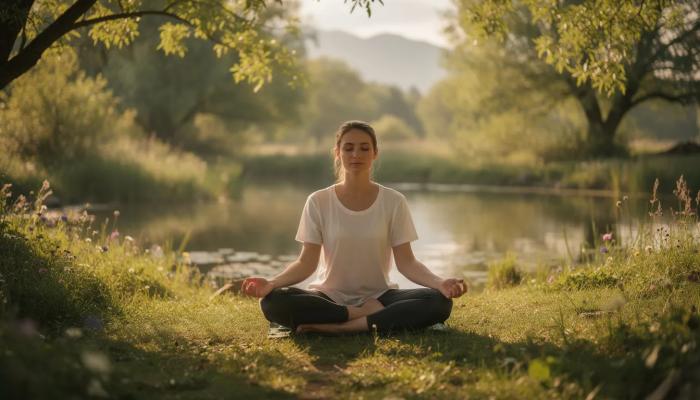
Mindfulness used to sound like something I would add to my schedule after I found extra time. Naturally, the extra time never arrived. What helped was making it smaller: noticing my coffee, taking a quiet walk, or paying attention during a routine task.
Research on mindfulness programs has found associations with changes in perceived stress and, in some studies, stress-related biomarkers. That does not mean mindfulness replaces treatment or solves every difficult season of life.
A practical reminder
The best calming routine is the one you can repeat on an ordinary Tuesday. Start with one habit, notice how it fits, and adjust from there.


More Pinterest Visuals



 Sleep & Insomnia Solutions13 Natural Ways to Get More Deep Sleep and Wake Up Feeling Rested
 Health & Wellness6 Simple Healthy Habits After 40 That Make Everyday Life Better
 Energy, Hormones & Stress ManagementMenopause und Nachtschweiß – 16 praktische Lösungen für ruhigere Nächte
 Energy, Hormones & Stress Management18 Natural Energy Boosters Without Caffeine That Fit Real Life